
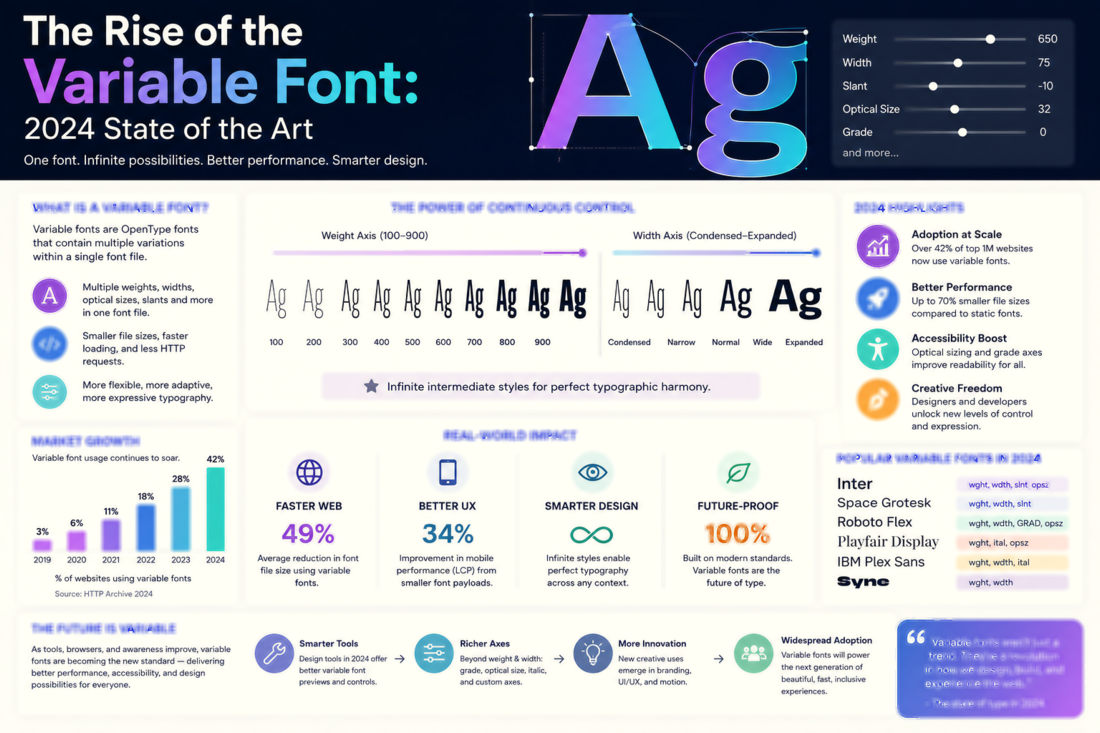
The Rise of the Variable Font: 2024 State of the Art
From Spec to Standard in Seven Years
Variable fonts were announced at ATypI 2016 as a joint specification from Apple, Google, Microsoft, and Adobe. In 2016, browser support was zero. By 2019, they were usable in production. By 2022, major font libraries including Google Fonts had converted most of their catalog to variable format. By 2024, variable fonts are the default output from most professional type design tools and the preferred format for web delivery among performance-conscious developers.
Adoption in 2024
Browser support for variable fonts sits at approximately 97% globally, meaning virtually no visitor to a modern website is missing out on variable font features. The HTTP Archive's Web Almanac data shows variable font usage growing by 30–40% year-over-year on major websites. Design tools including Figma, Adobe XD, and Sketch all support variable font axis controls in their interfaces.
Standout Variable Fonts Right Now
Recursive remains the most technically adventurous variable font available — it offers axes for casual/formal tone, monospace/proportional spacing, and even whether it's a sans-serif or a mono font, all within a single file. It's a technical marvel.
Fraunces brought "soft" optical sizing to the mainstream — the opsz axis changes the character of the letterforms dramatically, from an almost display-only elegance to a practical text-size workhorse.
Lexend targets reading speed and comprehension, with a custom HEXP axis controlling letter shape complexity. It was designed using reading proficiency research rather than aesthetic tradition.
What's Coming Next
The next frontier is color fonts — variable fonts with built-in multi-color layer information. COLRv1, now supported in Chrome and Firefox, enables fonts with gradients, shadows, and multiple colored layers that scale perfectly at any size. They open up creative possibilities that previously required SVG or images — and they do it with a single font file of reasonable size.
Font animation — using CSS transitions on variable axes to create subtle typographic motion — is also growing as designers discover that a heading that gently shifts weight on hover is far more interesting than a simple color change.